An in‑depth look at campaign management platforms driving marketing automation, efficiency, and performance
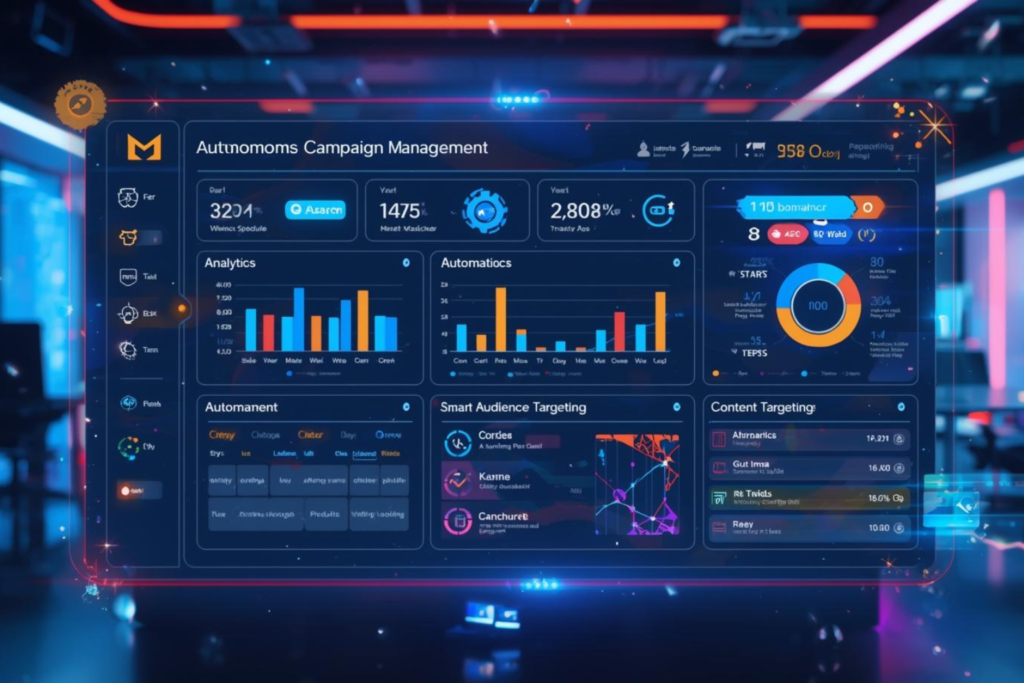
As marketing becomes increasingly automated, campaign management is shifting toward systems that think, adapt, and act autonomously.
In 2026, the brands that win will be those using integrated platforms that automate cross-channel campaigns, personalize at scale, and turn complex workflows into measurable business growth.
This guide walks you through the best autonomous campaign management tools available today, why they matter, and practical tips for implementing them effectively.
We’ve added comparison tables and decision frameworks to make choosing the right tool easier.
What Is Autonomous Campaign Management?
Autonomous campaign management refers to technologies that go beyond simple scheduling or basic automation. These platforms:
- Coordinate multichannel campaigns
- Use AI or smart automation to trigger workflows
- Enrich and segment data automatically
- Track performance insights in real-time
- Minimize manual steps while improving reach and engagement
Unlike traditional automation tools, autonomous systems can adjust campaign paths based on prospect behavior, timing, and conversion signals, giving marketers both scale and precision.
Top Autonomous Campaign Management Tools for 2026
Here’s a curated list of tools marketers will rely on in 2026, with key features, best use cases, and unique advantages.
Tool | Best For | Key Features | Autonomy Advantage |
La Growth Machine | Multichannel B2B campaigns | LinkedIn/email/social sequences, lead enrichment, AI voice messaging | Automated sequencing and prioritization based on prospect behavior |
Salesloft | Enterprise revenue orchestration | AI task prioritization, conversation analytics, pipeline insights | Aligns marketing sequences with sales priorities for enterprise-level automation |
Lemlist | AI-enhanced personalization | Email & LinkedIn personalization, multi-channel automation | Automatically adapts creative content per prospect for better engagement |
Outreach | Scaling sales & marketing | Predictive engagement insights, workflow orchestration | Optimizes multi-touch campaigns autonomously across channels |
Mailshake | SMB email-first campaigns | Email automation, deliverability, AI copy suggestions | Reduces manual campaign tasks with AI-assisted personalization |
Instantly | High-volume email campaigns | Unlimited accounts, deliverability optimization | Automates outreach volume while improving response rates |
Smartlead | Agency campaigns | Mailbox rotation, white-labeling, API integrations | Centralizes multi-client campaigns for agencies |
Klenty | Personalized cadences | AI-driven sequencing, CRM sync | Automates account-specific workflows for precise outreach |
Prospect.io | Contextual AI prospecting | Lead enrichment, AI-driven messaging | Crafts targeted campaigns based on real-time contextual insights |
ActiveCampaign | Cross-channel CRM automation | Email/SMS automation, engagement analytics, app integrations | Orchestrates dynamic journeys and adjusts campaigns automatically |
How to Choose the Right Campaign Management Tool
Here’s a decision framework to help you select the best platform:
Step 1: Identify your team size & workflow complexity
- SMBs → Mailshake or Instantly
- Mid-market → Lemlist, La Growth Machine
- Enterprise → Outreach, Salesloft, ActiveCampaign
Step 2: Define your channel strategy
- Single-channel focus → Mailshake
- Multichannel automation → La Growth Machine, Outreach
Step 3: Evaluate AI and automation needs
- Need personalization at scale → Lemlist, Klenty
- Need predictive task prioritization → Salesloft, Outreach
Step 4: Integration & CRM compatibility
- Ensure the tool integrates with your CRM for accurate lead tracking and analytics
Step 5: Budget & ROI analysis
- Compare pricing vs expected time savings and revenue uplift
Implementation Tips for Marketers
- Start with pilot campaigns – Test one or two workflows first to measure performance.
- Define success metrics upfront – Open rates, click-throughs, reply rates, pipeline impact.
- Leverage AI personalization where possible – Adjust subject lines, content, and sequences automatically.
- Monitor and refine – Autonomous doesn’t mean “set it and forget it.” Review reports weekly to adjust.
- Integrate analytics – Use dashboards to link campaign performance directly to revenue outcomes.
Pro Tip: Create a tool evaluation matrix comparing features, automation level, multichannel support, and cost — this ensures clear decision-making across teams.
Frequently Asked Questions
What is autonomous campaign management?
It’s an advanced form of automation where platforms automatically coordinate, execute, and adjust campaigns across channels with minimal manual input.
How do I know which tool is right for my business?
Use the decision framework: team size, channel strategy, CRM integration, and budget. Pilot campaigns before committing enterprise-wide.
Do these tools replace marketing teams?
No. They amplify productivity, letting marketers focus on strategy, creative messaging, and optimization rather than repetitive tasks.
Can I run campaigns across email, LinkedIn, and social from one platform?
Yes. Tools like La Growth Machine, Lemlist, and Outreach provide full multichannel automation.
How long until I see results?
Immediate engagement metrics may appear within days, while full conversion impact is measurable over weeks as automation and AI optimization refine sequences.
Final Thoughts
Autonomous campaign management is no longer just a trend — it’s the future of marketing efficiency. By 2026, successful teams will combine automation, AI personalization, multichannel orchestration, and analytics to deliver scalable results.
The right tool depends on team size, campaign complexity, channels, and goals. Start with pilot campaigns, integrate CRM data, and leverage AI for personalization to maximize ROI.
By adopting these platforms strategically, marketers can focus on high-level strategy while automation handles repetitive campaign tasks — driving smarter, faster, and more measurable marketing outcomes.